
Marathon County Criminal History Checks
Start with the record layer that can answer the question. The free Wisconsin Circuit Court Access system, often called WCCA or CCAP, finds filed circuit cases. The Marathon County jail roster addresses present local custody. The Wisconsin Online Record Check System, or WORCS, returns the state repository response for a paid name search. An incident narrative, body-camera record, dispatch audio, or old booking file must come from the agency that created it. Each source has a distinct job.
Gather the full name, spelling variants, approximate date, and any case or incident number before searching. A date of birth helps distinguish common names, but a name match alone does not prove identity. Work from the broad index toward the source file:
- Search WCCA by name, then filter to Marathon County and open each plausible case.
- Read charge-level dispositions and the docket rather than relying on the case caption.
- Check the official county roster when current jail custody or a recent booking is at issue.
- Use WORCS to see what the Wisconsin DOJ repository reports, and save the order reference.
- Request the report from the Sheriff, Wausau Police, Mosinee Police, or Mountain Bay Metropolitan Police, based on who created it.
- Contact the Clerk of Courts for certified copies, missing documents, and older off-site files.
Four Marathon County Record Custodians
The courthouse complex at 500 Forest Street is unusually dense with record offices. It holds the Marathon County Clerk of Courts, Circuit Court functions, District Attorney, Sheriff administration, and the adult jail. That shared address can make the system look like one archive. Legally and in practice, it is not. The Clerk controls the official court file. The Sheriff controls Sheriff-created reports and jail material. The District Attorney controls prosecution records. City police departments keep their own reports even when a person was booked at the county jail.
Clerk of Courts
500 Forest Street, Wausau, WI 54403
715-261-1300
Monday through Friday, 8:00 a.m. to 4:30 p.m.
Marathon County Sheriff
500 Forest Street, Wausau, WI 54403
715-261-1200
Administration hours: weekdays, 8:00 a.m. to 4:30 p.m.
County Jail
500 Forest Street, Wausau, WI 54403
715-261-1700
Call for custody procedures, not case outcomes.
District Attorney
500 Forest Street, Wausau, WI 54403
715-261-1111
The office reviews referrals and files state charges.
Ask for the correct custodian at the start. A Wausau incident belongs with Wausau Police, while a filed felony belongs with the Circuit Court. Security screening applies at the courthouse, so allow time and confirm camera or phone rules before inspecting a file.
Official Background Checks in Wisconsin
The Wisconsin Department of Justice Crime Information Bureau operates WORCS. A member of the public may submit a request without registering or may create an account. The ordinary public request costs $7. An unregistered user must keep the order reference number to retrieve the result, and completed results remain available for six months. A request may take until the next business day when it does not finish at once.
WORCS is a Wisconsin name-based repository search, not a nationwide fingerprint check. DOJ matching uses exact date of birth, exact last name, and exact first initial, or an exact Social Security number with the exact last name and first initial. Similar identifiers can produce more than one candidate. Review the entire response before linking it to a person. For a subject-only federal self-review, the FBI Identity History Summary requires fingerprints and an $18 FBI fee.
| Product | Coverage | Base cost | Main limit |
|---|---|---|---|
| WORCS | Wisconsin DOJ repository | $7 | Name ambiguity and possible local or federal gaps |
| WCCA | Filed Wisconsin circuit cases | Free online | Public docket, not the official court file |
| FBI Identity History Summary | FBI fingerprint history | $18 | Subject-only; fingerprint and service costs may apply |
WORCS or WCCA for Marathon Records
WORCS and WCCA often get treated as interchangeable background-check tools. They answer different questions. WCCA shows Wisconsin circuit cases after charges are filed. It lets a reader follow counts, hearings, pleas, orders, judgment, and sentence entries. WORCS searches data reported to the Crime Information Bureau, including fingerprint-linked arrest cycles and dispositions that agencies sent to the state repository.
A case may appear in WCCA while a disposition has not yet reached CIB. A local incident may never produce a filed case. A booking can leave the current roster after release. Conversely, an expunged court case may disappear from public WCCA while a police or DOJ record remains. Compare dates, agencies, statutes, and disposition text. The best answer may require both state systems plus the source report.
- Arrest cycle
- A fingerprint-associated episode that may contain arrest charges and later reported outcomes.
- Docket
- The dated list of filings, hearings, orders, warrants, pleas, and judgments in a court case.
- Disposition
- The result for a specific charge, such as conviction, dismissal, or acquittal.
- Master name
- The name supplied with the first fingerprint submission; DOJ warns that it may be an alias.
Kinds of Marathon County Criminal Records
One event can create several records, and each one freezes a different stage of the process. Police document the call and alleged conduct. Corrections staff create the booking entry. The prosecutor decides whether to file charges. The court records the case. State and federal repositories then depend on what agencies report. Keeping those stages separate prevents an allegation from being mistaken for a conviction.
- Incident and arrest reports: held by the Sheriff or police agency that handled the event.
- Booking and custody records: created by Marathon County Jail for intake, holds, bond, and release status.
- Court case files: kept by the Clerk after the District Attorney files state charges.
- Repository responses: returned by Wisconsin DOJ through WORCS from reportable state data.
- Corrections and registry records: managed by Wisconsin DOC for custody, supervision, and sex-offender registration.
Warrants form another layer. Marathon County has no complete official public active-warrant name database. Public WCCA entries may supply a lead, but sealed matters and system delays require confirmation with the issuing court or Sheriff.
Marathon County Jail Record Limits
The official Corrections page is the durable route to the current inmate roster. The jail serves local law-enforcement jurisdictions and may hold people for other Wisconsin or federal agencies. Its public interface can show current custody details, booking information, charges, bond, and related court references when those fields are available. It is not a permanent archive.
A missing name does not show that no arrest occurred. The person may have been released, cited without booking, transferred, or entered under spelling that does not match the search. Historical booking documents require a public-records request. State prison or community-supervision status belongs in the Wisconsin DOC Persons in Our Care system, and federal custody belongs in the Bureau of Prisons locator.
The jail opened in 1988, gained a 120-bed addition in 2000, and now has a stated adult capacity of 279. Its place inside the courthouse explains why several Marathon County record layers share an address while remaining separate.
Marathon County Records: What They Contain
A Wisconsin repository response begins with the identifiers used for the search and may list a master name, aliases, physical descriptors, state identification data, arrest cycles, charges, agencies, and reported dispositions. A Marathon court file adds the filed complaint, charge-by-charge events, motions, hearings, judgment, and sentencing. Jail and police records contribute custody and incident detail that may never appear in either state product.
| Name and identifiers | Searched name, aliases, date-of-birth descriptors, and state identifiers where law permits. |
|---|---|
| Arrest and booking | Arrest date, agency, tracking or booking number, charges presented, holds, and custody status. |
| Charges and statutes | Officer allegations, prosecutor-filed counts, statute citations, and severity, which may differ by stage. |
| Disposition | The result for each filed count, including dismissal, conviction, acquittal, or other recorded outcome. |
| Sentence | Jail, prison, probation, extended supervision, fines, restitution, and conditions when reported. |
| Custody or supervision | County jail status or Wisconsin DOC custody and supervision, depending on the source searched. |
Sensitive identifiers are not necessarily shown in full. Juvenile, sealed, victim, health, security, and active-investigation information can be withheld or redacted.
Requesting Marathon County Police Records
For Sheriff-created reports, use the Marathon County public-records request portal or contact the Sheriff at 500 Forest Street and 715-261-1200. Describe the report, date range, location, involved agency, incident number if known, and preferred format. Wisconsin law does not require magic words or a purpose, but the request must be specific enough for staff to find responsive material.
City records stay with city custodians. Wausau Police uses its own NextRequest channel. Mosinee accepts requests through its police clerk, by phone, at the counter, or through the city form. New Schofield police records route to Mountain Bay Metropolitan Police after the regional transition. A county booking does not transfer a city department's full investigative file to the Sheriff.
Fees may include actual, necessary, and direct reproduction costs. Location costs may be charged when they exceed $50, and prepayment may be required when total fees exceed $5. Marathon County does not publish a complete Sheriff per-page or certification schedule in the researched sources, so confirm costs before ordering.
Wisconsin Public Access Laws
The Wisconsin Public Records Law favors access, but it does not mean every record is posted online or released without review. The legal custodian for each authority evaluates the request, applies confidentiality statutes, and balances the public interest in disclosure against nondisclosure when required. A response is due as soon as practicable and without delay, not under a universal ten-day rule. Ask for segregable, releasable portions when part of a file is protected.
Key Wisconsin laws:
Wis. Stat. §§ 19.31 to 19.39 establish public-record access, custodian duties, fees, limits, and remedies.
Wis. Stat. § 165.83 supports criminal-identification reporting to the state repository.
Wis. Stat. § 973.015 governs circuit-court expungement.
Wis. Stat. §§ 301.45 to 301.46 govern sex-offender registration, access, and notification.
A written denial should state reasons and identify the authority relied on. Juvenile information, protected victim data, health details, sealed search-warrant material, and security-sensitive jail records need special analysis.
Correcting a Marathon County Record Match
When WORCS returns a candidate who may not be the searched person, compare the full record rather than relying on the name heading. DOJ states that names and birth dates are not unique. It also warns that the master name may be an alias supplied at the first fingerprint event. Arrest agency, dates, descriptors, cycle numbers, and dispositions provide a stronger basis for review.
For an inaccurate CIB record, use Wisconsin DOJ challenge Form DJ-LE-247. The process can compare the challenger's fingerprints with prints associated with the disputed history. After a successful identity challenge, DOJ may issue a Wisconsin Unique Personal Identification Number, or WiUPIN, to reduce later false matches. CIB record-check staff can be reached at 608-266-7314 or cibrecordcheck@doj.state.wi.us on weekdays from 8:00 a.m. to 4:00 p.m.
That challenge is different from expungement. A challenge corrects inaccurate repository information. Expungement changes access to an eligible circuit-court case after a court order.
Restricted, Sealed & Expunged Records
Marathon County gives a vital local warning about Wisconsin expungement. When the court grants relief under § 973.015, the circuit-court case file is sealed in paper and electronic form and its reference is removed from public WCCA. The court would disclose no case information in response to a later request. Yet the judge controls only the circuit-court file. Wisconsin DOJ, an arresting agency, the prosecutor, DOT, and other offices may retain their own records.
Eligibility generally must be decided at sentencing. It depends on the offense, date, age, statutory exclusions, and successful completion of the sentence. Review the judgment and current law rather than using a broad checklist. Start with the Marathon County Clerk, identify each case number, and use current Wisconsin court forms. If relief is granted, review WORCS and police sources separately. A pardon may forgive an offense and restore some rights, but it does not itself erase WCCA or expunge the conviction.
Juvenile cases, confidential case types, sealed matters, and protected victim information are also restricted. Their absence from a public result is not proof that an event never existed.
Marathon County Court Diversion Records
Marathon County Court Diversion began in January 2007 for low-risk, first-time participants. The District Attorney creates a tailored agreement that may use counseling, programs, or education. The stated goals include victim involvement and approval, restitution or apology, fewer repeat offenses, and reduced pressure on court and law-enforcement workloads.
Diversion matters because the visible record path can differ from a conventional prosecution. An incident report may remain with police even when no conviction appears. Depending on timing and filing, WCCA may not tell the whole story. A person reviewing their own history should compare the arresting agency's record, the court index, and the state repository before assuming that no public case means no record exists.
The District Attorney is at 500 Forest Street and can be reached at 715-261-1111. That office, not the court clerk or jail, administers the agreement terms.
Federal Records Beyond Marathon County
Marathon County lies in the U.S. District Court for the Western District of Wisconsin. Federal criminal dockets and documents use PACER, not WCCA. Federal custody after sentencing uses the Bureau of Prisons locator. A person held locally for a federal agency may still appear in the county jail roster before transfer, so agency and custody labels matter.
The Federal Bureau of Prisons locator provides the official federal custody search shown here.
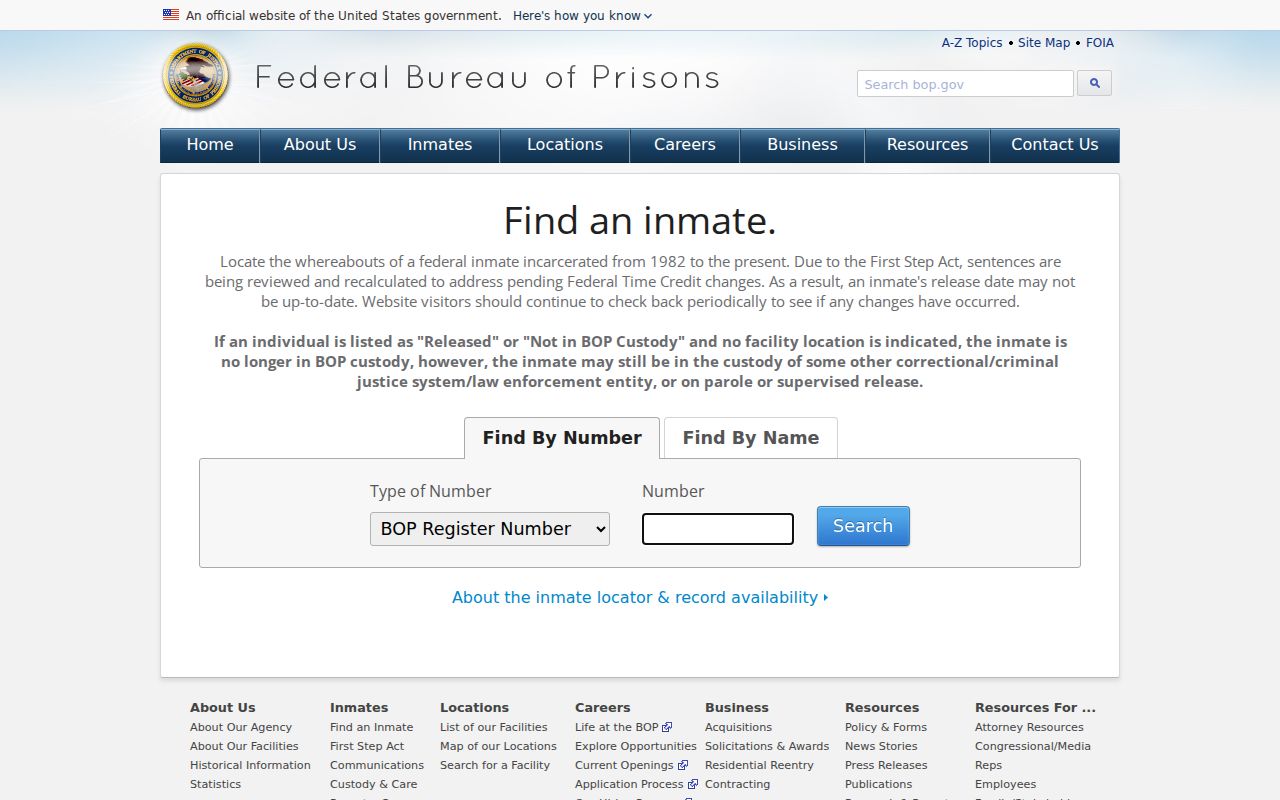
The locator searches by name or federal identification number, but it does not replace the docket or explain a county booking.
For a fingerprint-based self-review, the FBI electronic Identity History Summary portal is the official starting point.
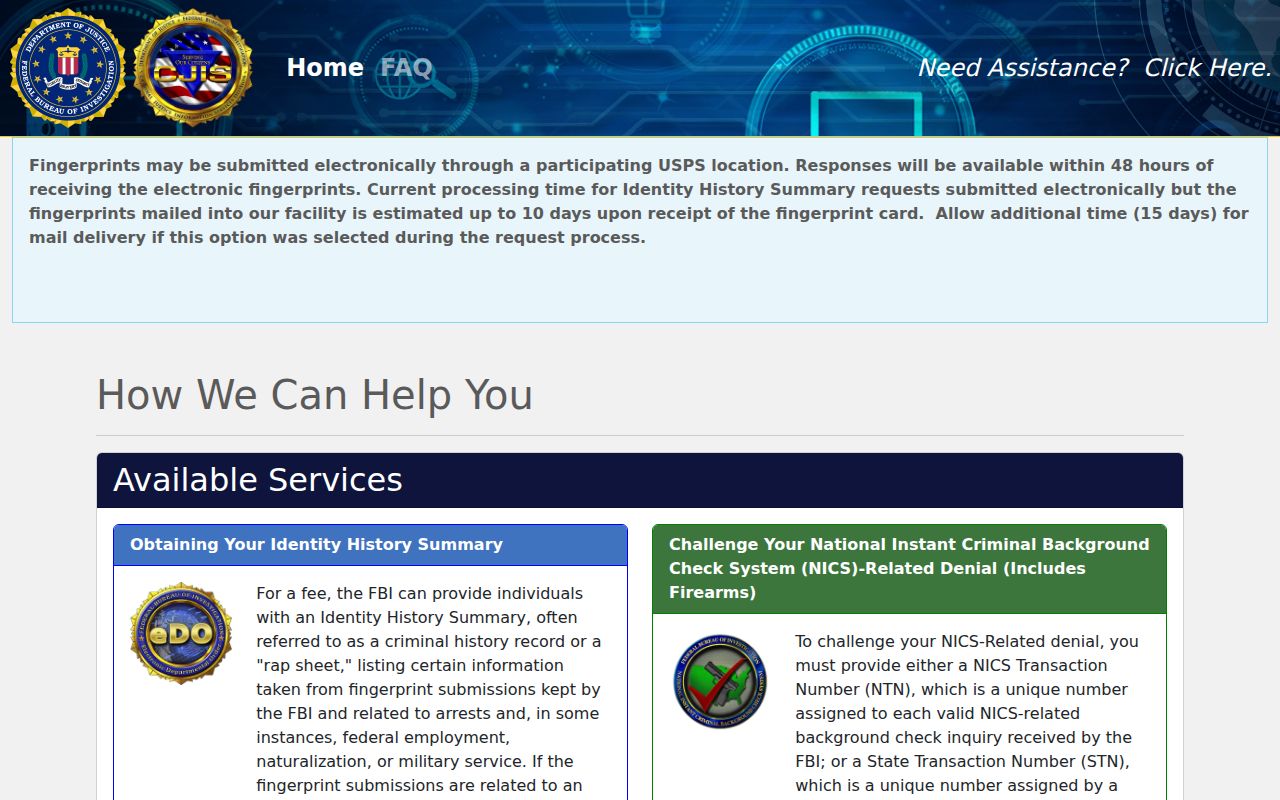
The FBI product is tied to submitted fingerprints and differs from both a Wisconsin name search and a Marathon County court file.
City-by-City Criminal Records in Marathon County
Marathon County bookings converge at the county jail, but city incident reports and ordinance cases do not. Wausau, Mosinee, and Schofield each use a distinct local path. These city record checks focus on the police custodian, municipal court, and route from a local arrest to county and state systems.
Wausau Record Check
Population estimate 40,571. Wausau Police uses NextRequest, while its municipal court handles city ordinance cases.
Mosinee Record Check
Population estimate 4,578. Police requests and third-Monday municipal court records use city channels.
Schofield Record Check
Population estimate 2,279. Mountain Bay Metropolitan Police now holds new regional police records.